- 83 Posts
- 4 Comments



 22·2 months ago
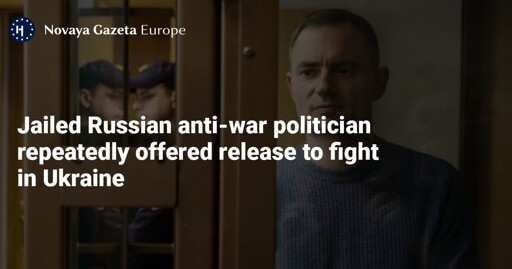
He is for sure pro-Russian in principle, and certainly not what we would call pro-Western or a friend of democracy. He and his fellow generals warned, however, of a war against Ukraine already early 2022.
On 1 February 2022, roughly three weeks before Russia invaded Ukraine, Leonid Ivashov, then chairman of the All-Russian Officers Assembly, published a piece title, ‘On the Eve of War?’ – Appeal of the All-Russian Officers Assembly to the President and Citizens of the Russian Federation, warning about a war against Ukraine:
Today mankind is living in expectation of war. A war inevitably means human casualties, destruction, suffering for large masses of people, loss of the habitual way of life, and the disruption of the vital systems of states and peoples. A big war is an enormous tragedy, someone’s grave crime. And it so happens that Russia has found itself in the center of this imminent catastrophe.
And this is perhaps happening for the first time in its history. In the past, Russia (the Soviet Union) waged necessary (justified) wars, generally when there was no other way out, when the vital interests of the state and society were under threat. But what is threatening Russia’s existence today? And are there really any such threats anyway?
He then continues criticizing Putin’s foreign policy:
Naturally, in order for Ukraine to remain a friendly neighbor for Russia, Russia would have had to demonstrate the attractiveness of its state model and system of government. But Russia never became a friendly neighbor; its model of development and foreign policy mechanism for international cooperation repelled almost all its neighbors and beyond. Russia’s appropriation of the Crimea and Sevastopol, and their nonrecognition as Russian by the international community (meaning that the majority of countries in the world still believe they belong to Ukraine) are convincing proof of the failure of Russian foreign policy and the unattractiveness of its domestic policy. Attempts to use ultimatums and the threat of force to make [others] “fall in love with” Russia and its leaders are pointless and extremely dangerous.
Ivashov, usually maintaining a hard line against the West, refused the Kremlin’s public propaganda of Nato being a threat:
As far as external threats are concerned, they definitely exist. But in our expert opinion, they are not critical at the moment, and do not pose a direct threat to the existence of Russian statehood and its vital interests. Strategic stability has been preserved overall, nuclear weapons are under reliable control and groups of NATO forces are not amassing or displaying any threatening activity. Therefore, the explosive situation surrounding Ukraine is primarily artificial and self-serving for some internal forces, including in Russia.
He then addresses the threat a war could pose to the Russian state:
The use of military force against Ukraine will, first of all, call into question Russia’s very existence as a state. Second, it will turn Russians and Ukrainians into mortal enemies. Third, thousands (tens of thousands) of young, healthy people will die on both sides, which will naturally have an effect on the future demographic situation in our dying countries. On the battlefield field – if there is a battle – Russian troops will face not just Ukrainian soldiers, many of whom will be [ethnically] Russian, but also NATO troops and equipment, while NATO member states will be obligated to declare war against Russia … In addition, there is no doubt that Russia will be added to the category of countries that pose a threat to peace and international security, subjected to the most severe sanctions, transformed into a pariah in the eyes of the international community and probably lose the status of an independent state. There is no way that the president, the government and the Defense Ministry do not understand these consequences.
Finally, they address Putin himself, demanding his resignation:
We, Russia’s officers, demand that the Russian president abandon the criminal policy of provoking a war in which Russia will find itself alone against the united forces of the West and create conditions for implementing Art. 3 of the Russian Constitution [which states that the people are the only source of power – Trans.] and resign.
You apparently don’t even read the linked report while posting false information, citing wrong numbers.
Russia’s Manufacturing PMI in December is 48.1, it is below 50 since June this year. There is a clear downward trend during the last 4 years as the war drags down Russia’s economy.
The U.S. Manufacturing PMI for the US in December 2025 is 51.8. The trend over the last 3 years even shows an upward trend.
Please look at the numbers before trolling around.
I don’t know where you are getting this, but wherever it is, stay away from it.
The data regarding the business confidence comes from Russian panelists. These are Russian entrepreneurs.
Even Russia’s official data are pessimistic. The Russian Economic Development Ministry has already in September lowered its GDP growth forecast for 2025 to 1.0% from the 2.5% it was predicting in April. The Russian Central Bank in October lowered its 2025 growth forecast to 0.5%-1.0% from its July outlook of 1.0-2.0%.
This growth comes apparently solely from the industrial-military complex at the expense of civilian industries. According to Rosstat, Russia’s Federal Statistics Service, total industrial production jumped 3 percent month-on-month in October, though driven largely by defense-related manufacturing. At the same time, according to Rosstat, production of construction materials and glass has been declining for about a year, with output of basic building materials down roughly 11–12 percent over that period.
The auto industry suffered across all categories as vehicle output saw a 8.9% decline in October compared with the previous month and plunged 62% year-on-year (China’s car industry is the big winner here, btw).
Russian Railways, with a debt burden of 4 trillion rubles (43 billion euros), scaled back investment real capital investment in transport by 26% in the first half of 2025, while investment in passenger rail dropped by 48%.
As the military industry is granted preferential treatment - particularly subsidized loans to bear the high interest rates -, Russia’s budget deficit widens, and, again, the civilian industry (here with the exception of very few companies such as some construction businesses that receives similarly subsidies) pays the bill.
It also fuels inflation. Putin has recently announced that the ‘goal’ of an annual inflation rate of 6% for 2025 has been reached, but the Russian Central Bank has a different view and set the key interest rate at 16%, again around 10 percentage points higher then the official inflation rate.
This is a TINY sample of data that paints a devastating picture of Russia’s economy - and it comes from official Russian sources such as Rosstat and directly from the government.
Russia’s power exports to China halted amid energy price dispute